Exploring the Charm of Salou: A Travel Guide
If you’ve been looking into Spain’s Costa Dorada, there’s a good chance you’ve come across Salou. It’s one of those places that seems to work for almost everyone. Families come for the beaches and PortAventura, couples enjoy the sea and evenings out, and groups often come for the nightlife. Even if you’re travelling on your own, there’s plenty to see and do.
The town has long golden beaches, a wide promenade, and plenty of places to eat, drink, and relax. And when the sun goes down, Salou changes a little. You can have a quiet drink by the sea or head into the busier streets and stay out late.
The nice thing about Salou is that you can make the trip whatever you want it to be. You could spend a whole week doing very little beyond swimming, walking by the sea, and finding a comfortable place in the sun. Or you can fill your days with rollercoasters, coastal walks, water activities, and trips to nearby places such as Tarragona.
In this guide, we’ll cover what Salou is like, where it is, the best things to do, where to eat and stay, and how to plan your time. The aim is simple: help you enjoy Salou without feeling like you have to rush from one place to the next.
Where Is Salou?
Salou sits on the southern coast of Catalonia, right on the stretch of Mediterranean coastline known as the Costa Dorada (Costa Daurada in Catalan), which translates roughly to “Golden Coast” a fitting name once you’ve seen the sand.
Geographically, it’s tucked in the province of Tarragona, just a short hop from the city of the same name. Tarragona itself is about 10 kilometres away, Reus (and its airport) is roughly 12 kilometres inland, and Barcelona is around 110 kilometres to the northeast, close enough for a day trip if you don’t mind an early start.
Because of this location, Salou works nicely as a base for exploring more of southern Catalonia. You get beach-resort convenience during the day and easy access to historic towns and cities whenever you want a change of pace. It’s part of a wider Costa Dorada region that also includes Cambrils, La Pineda, and Vila-seca, all of which blend into each other along the coast.
Why Visit Salou?
There isn’t really one reason to visit Salou. It’s more about how everything seems to come together without much effort.
The beaches are the obvious starting point. You’ve got long stretches of golden sand, clear Mediterranean water, and smaller coves where you can get away from the busier parts of town. Some days you might want the lively beach atmosphere, while on others, a quiet spot by the water sounds much better.
Salou is also an easy place for families, but you don’t have to be travelling with children to enjoy it. There are plenty of restaurants, cafés, bars, and places to spend an evening, whether you want a quiet dinner or somewhere a little livelier.
If you feel like doing more than swimming and sunbathing, there are plenty of water activities to try, including kayaking, paddleboarding, and boat trips. On land, the coastal paths are a great way to see a different side of the town, especially when the sun starts to go down.
And then there’s PortAventura World, just a short distance away. For many families, it’s the main reason for coming to Salou in the first place. Add the easy transport connections and the relaxed feel you find once you step away from the busiest streets, and it’s not difficult to understand why people return to Salou again and again.
Best Things to Do in Salou
Relax on Salou’s Beautiful Beaches
Salou’s beaches are the heart of the town, and they’re not all the same, which is part of the appeal.
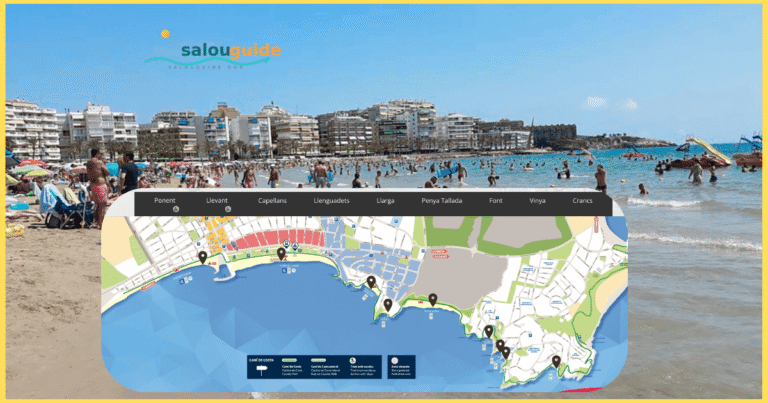
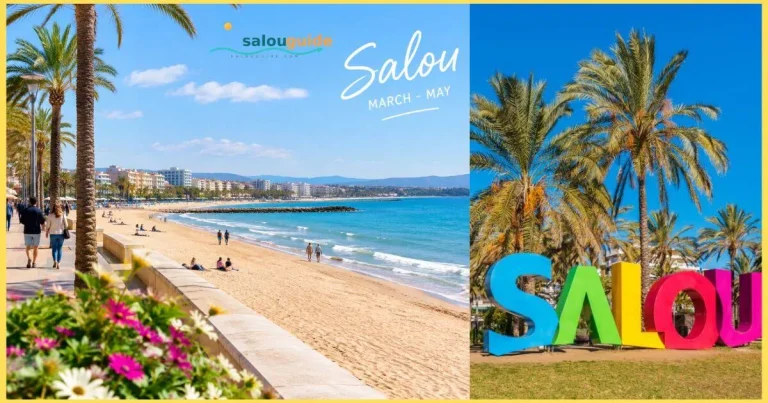
Playa de Llevant is the main beach in Salou and usually the busiest. It has soft golden sand and calm, shallow water, making it a popular choice for families with younger children. Plenty is happening around it too, so you’re never far from a café, restaurant, or ice cream.
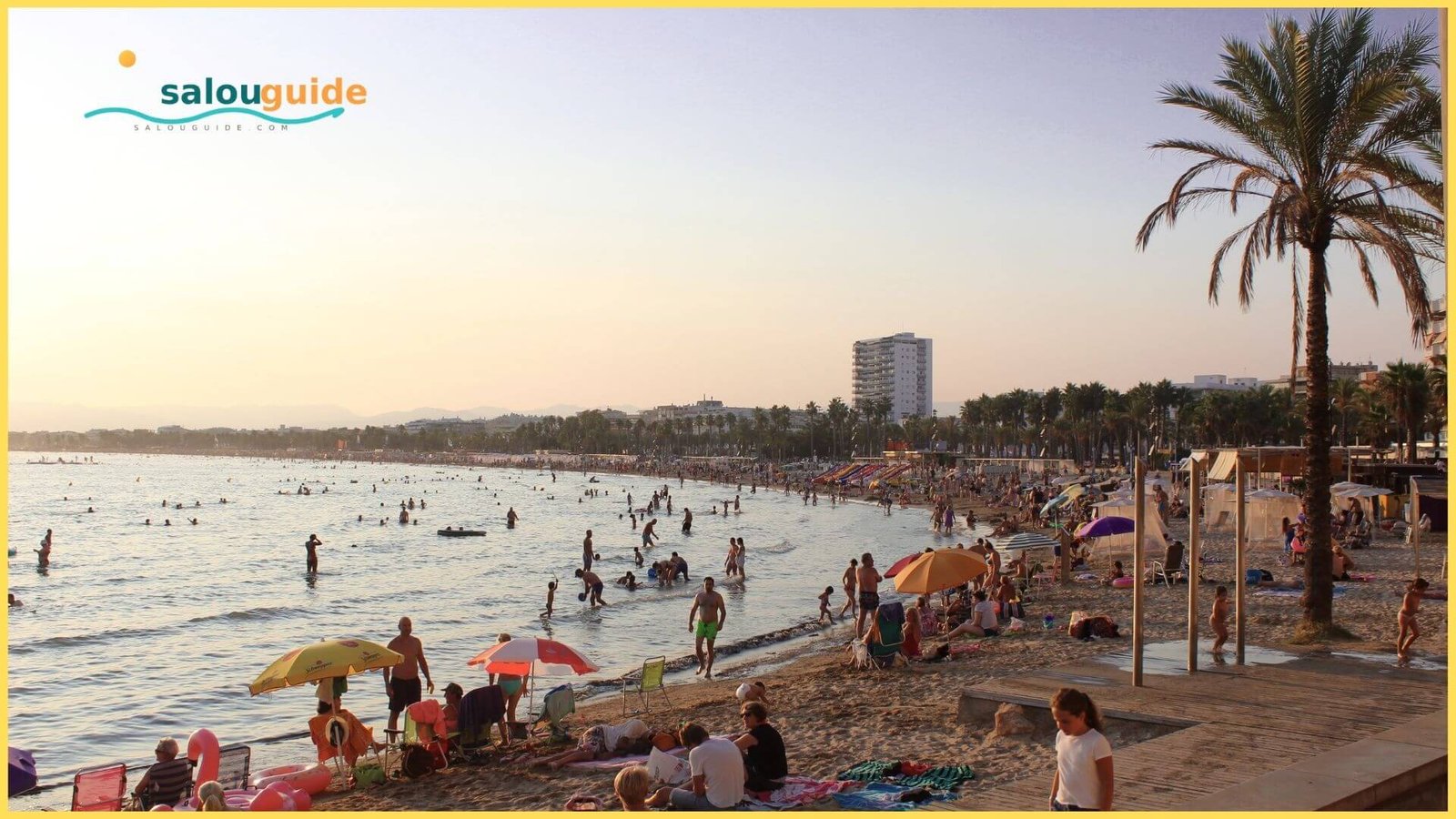
Playa de Ponent runs along the coast and tends to feel a little more relaxed. It’s another good option for families, but it’s also a lovely place to slow down in the evening. If you stay until sunset, the light over the water can be beautiful.
Playa dels Capellans is smaller and a bit quieter than the two main beaches. It’s a nice choice if you want to spend a few hours by the sea without being right in the middle of the busiest part of Salou.
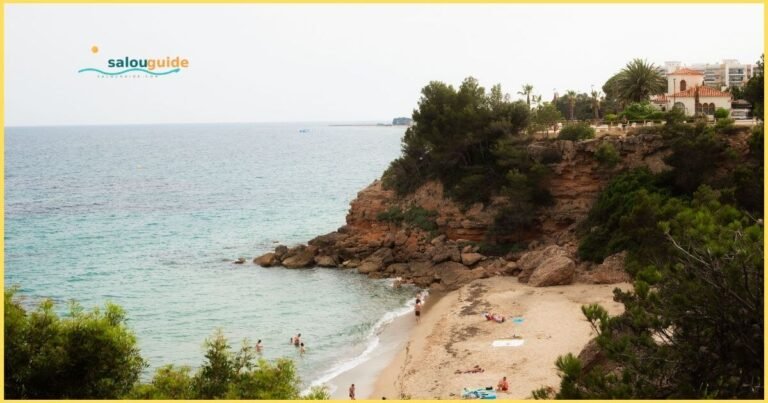
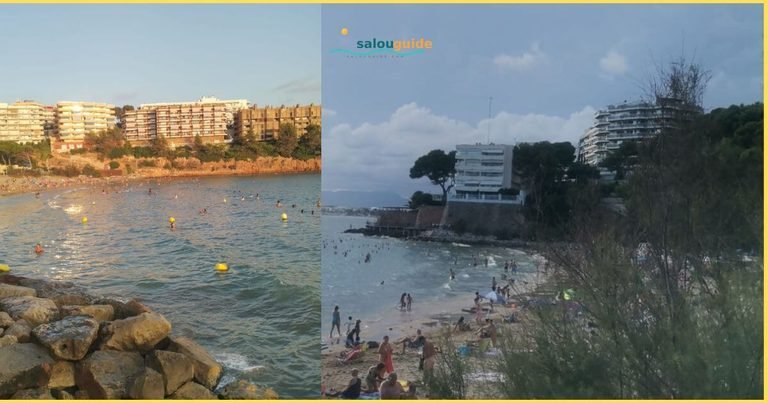
If you’re after something quieter still, Cala Llengüadets and Cala Crancs are worth seeking out. These are small coves rather than sprawling beaches, backed by rocky outcrops and pine, and they feel a world away from the main resort strip even though they’re only a short walk from it. Cala Crancs in particular is popular with snorkelers thanks to its clearer, calmer water.
Walk Along the Passeig Jaume I
The seafront promenade is one of those spots that just works at any time of day. Lined with palm trees, fountains, restaurants, and the odd street performer in summer, it runs the length of the main beaches and gives you sea views the entire way.
Early morning is best if you want it to yourself; you’ll get soft light for photos and none of the crowds. In the evening it turns into something else entirely: families out for a stroll, ice cream in hand, the fountains lit up, restaurants filling their terraces. Either way, it’s worth doing more than once during your stay.
Explore the Camino de Ronda
This is Salou’s coastal walking trail, and it’s one of the better free things to do in town. The path traces the cliffs and coves south of the main beaches, giving you sweeping Mediterranean views without needing a car or a tour.
Expect a mix of paved sections and rougher, more natural stretches, with several spots along the way where you can climb down to a hidden cove for a swim. Bring proper shoes rather than flip-flops, carry water, and try to go earlier in the day during summer — there’s not much shade along parts of the route.
Visit Font Lluminosa
Salou’s illuminated fountain is a small but genuinely charming attraction, especially after dark. In the warmer months, it puts on a light and water show most evenings, drawing a steady crowd of families and couples who gather around to watch. It’s not a headline attraction on its own, but it’s a nice, free way to round off an evening walk along the seafront.
Discover Salou’s Natural Beauty
Beyond the beaches and the busy promenade, Salou has a quieter side that’s easy to miss. Pine trees cover parts of the coast, and a few higher spots give you nice views back across the town and out towards the sea.
If the busy streets start to feel like too much, these little corners are worth exploring. You don’t have to go far to find a bit of peace. It’s a nice reminder that Salou wasn’t always a busy holiday resort. Long before the hotels, restaurants, and summer crowds arrived, this was a much quieter part of the coast, shaped by the sea and its fishing traditions.
PortAventura World: Salou’s Biggest Attraction
For a huge number of visitors, PortAventura World is the entire reason Salou made it onto the itinerary in the first place. It’s one of the largest resort complexes in Europe and easily the biggest draw in the region.
The complex is split into three main parts. PortAventura Park is the original theme park, themed around different world regions: Mediterránea, Polynesia, China, Mexico, SésamoAventura, and the Wild West, with rides ranging from family-friendly to genuinely terrifying (Shambhala and Dragon Khan have serious reputations among coaster fans). Ferrari Land is next door, built around Europe’s tallest and fastest vertical accelerator coaster, plus a run of racing-themed attractions for those who don’t want quite that much adrenaline. And PortAventura Caribe Aquatic Park rounds things out with water slides and pools, ideal for a hot afternoon.
If you’re only visiting one park, plan for a full day, arriving as close to opening as you can; queues build fast, especially in summer. To properly cover all three, you’re realistically looking at two to three days, and multi-day or multi-park tickets tend to work out cheaper than buying separately. During peak season, it’s worth checking whether the park offers any express or fast-track options, since July and August queues for the big rides can run well over an hour.
Best Beaches in Salou
Here’s a quick side-by-side if you’re trying to decide which beach suits your trip:
| Beach | Best For |
|---|---|
| Llevant Beach | Families & swimming |
| Ponent Beach | Relaxation & sunsets |
| Capellans Beach | Smaller beach experience |
| Cala Llengüadets | Quiet atmosphere |
| Cala Crancs | Nature & scenic views |
All the main beaches have decent facilities: sun loungers and umbrellas for hire, showers, lifeguards in season, and easy wheelchair access along the boardwalks. Water conditions are generally calm and shallow close to shore, which is a big part of why Salou suits families so well, though the smaller coves can have a bit more current and rockier entry points. If you want the beaches at their best, aim for early morning or the last couple of hours before sunset — midday in July and August gets packed and hot.
Salou for Families
It’s not an exaggeration to say Salou is built around family holidays. The calm, shallow water at beaches like Llevant makes it easy to relax without constantly watching for waves, and PortAventura World obviously does a lot of the heavy lifting when it comes to keeping kids entertained.
Beyond that, there’s a good stretch of flat, paved promenade that’s ideal for cycling or scooting, several playgrounds dotted around town, and plenty of restaurants set up for kids — high chairs, simplified menus, that sort of thing. Aquatic activities like pedal boats and gentle boat trips are easy to book right from the beach.
If you’re travelling with children, staying near Llevant Beach or somewhere between the town centre and PortAventura tends to work best — you get beach access without needing a car every day, and it’s a manageable walk or short bus ride to the park.
Salou Nightlife and Entertainment
It’s fair to say that Salou is very used to welcoming families. The water around beaches like Llevant is usually calm and shallow near the shore, which makes beach days a little easier when you’re travelling with young children. And, of course, there’s PortAventura World nearby, which can easily keep the kids excited for a whole day.
But you don’t have to spend every day at a theme park. The long, flat promenade is great for walking, cycling, or letting the kids have a little scoot around. You’ll also find playgrounds around town and plenty of family-friendly restaurants with high chairs and simple meals for younger children.
If everyone gets restless, you can always head back to the water. Pedal boats, short boat trips, and other gentle activities are easy to find along the main beaches.
For families, staying around Llevant Beach is a practical choice. Another good option is the area between the town centre and PortAventura. You’ll be close enough to the beach for easy mornings by the sea, while the park is still only a manageable walk or short bus ride away. It means less time travelling and more time actually enjoying the holiday.
Best Places to Eat in Salou
Food in Salou reflects its position in Catalonia; you’ll find plenty of traditional Catalan dishes alongside classic Spanish tapas and excellent Mediterranean seafood, given the coastal location.
Rice dishes are a highlight here, and not just the paella you’d expect; look out for arròs negre (rice cooked in squid ink) and fideuà, a noodle-based dish that’s essentially paella’s cousin. Fresh grilled fish and seafood platters are widely available, especially along the seafront, and small tapas bars tucked into the side streets tend to offer better value than the restaurants directly on the beach.
That said, Salou is thoroughly international when it comes to dining too; Italian, Indian, British, and various fusion restaurants are easy to find if you fancy a break from Spanish food. For the best combination of sea views and decent food, the restaurants along Ponent Beach are generally a safer bet than the most central, tourist-heavy spots.
Where to Stay in Salou
Best Areas for Families
Around Llevant Beach or the streets just behind it put you close to calm water, restaurants geared toward kids, and reasonably easy access to PortAventura.
Best Areas Near the Beach
Anywhere along or just off the Passeig Jaume I gives you the shortest walk to the sand, though it comes with higher prices and more noise in peak season.
Best Areas for Nightlife
The centre of town, particularly around Carrer de Barcelona, puts you in the middle of the bar and club scene — handy if you plan to be out late, less ideal if you want an early night.
Quiet Areas for Couples
Ponent Beach and the areas further from the main centre tend to be calmer, with a slower pace and better sunset views.
Hotels Near PortAventura World
If theme park days are the priority, several hotels sit right at the park’s edge, some with direct entrance access worth it if you want to avoid transport altogether.
As for hotels versus apartments: hotels generally make more sense for shorter stays or if you want pools and breakfast included, while apartments suit longer trips or families who’d rather cook some meals themselves. Budget options are plentiful outside peak season, while July and August push prices up across the board; booking a few months ahead makes a real difference.
Best Time to Visit Salou
Salou in Spring
Mild, comfortable weather and noticeably fewer crowds make spring a strong choice for sightseeing and walking the coastal paths without the summer heat.
Salou in Summer
This is peak beach season: warm water, full sun, and the busiest the town gets. Expect higher accommodation prices and a livelier atmosphere everywhere, from the beaches to the bars.
Salou in Autumn
Temperatures stay pleasant well into September and October, beaches thin out considerably, and it’s arguably the best window for walking the Camino de Ronda without the summer crowds or heat.
Salou in Winter
Quieter still, and noticeably cooler, though rarely cold by northern European standards. Some seasonal restaurants and beach bars do close for the winter, so options narrow a bit.
The short version: come in summer for beaches and nightlife, spring or autumn for sightseeing and value, and avoid summer altogether if budget is the main concern. Families juggling school holidays are largely locked into summer regardless, but it’s worth knowing what you’re trading for that convenience.
How to Get to Salou
From Barcelona
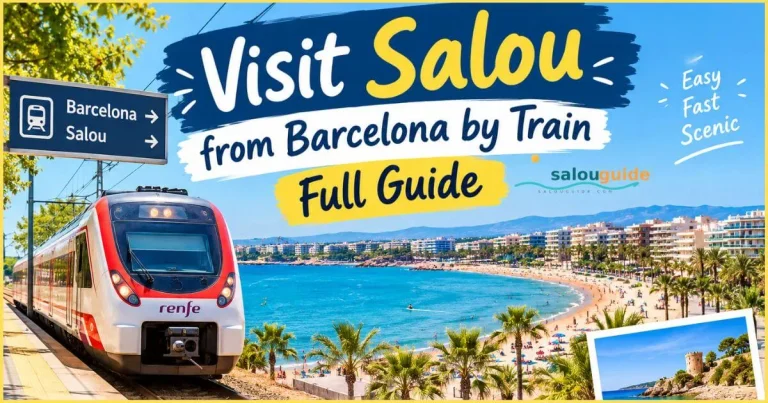
By car, it’s roughly 1 hour 15 minutes down the AP-7 motorway. By train, regional and high-speed services run regularly from Barcelona Sants to Tarragona or directly to Salou/PortAventura station, taking anywhere from 50 minutes to just over an hour depending on the service. Buses are also available and generally cheaper, though slower.
From Reus Airport
Reus Airport is the closest and most convenient option for anyone flying in. A taxi to Salou takes about 15–20 minutes. There are also direct bus services timed around flight arrivals in peak season, and car rental desks at the airport if you’d rather have your own wheels.
From Tarragona
Tarragona is close enough that trains, buses, and taxis all take well under half an hour. Because of that short distance, a lot of visitors combine the two destinations into one trip: beach days in Salou, history and Roman ruins in Tarragona.
Getting Around Salou
Salou itself is compact enough to explore mostly on foot, especially if you’re staying anywhere near the centre or the main beaches. Local buses connect the town with PortAventura, Cambrils, and other nearby areas, and taxis are easy to find, particularly around the centre and train station.
Cycling is a genuinely good option too, since a lot of the seafront is flat and pedestrian- or bike-friendly. Car rental only really becomes worthwhile if you’re planning several day trips further afield, since parking in the centre during summer can be a hassle. For most short stays focused on the beach and PortAventura, you honestly don’t need a car at all.
Best Day Trips from Salou
Tarragona
A genuine highlight if you’re into history, Tarragona has some of the best-preserved Roman ruins in Spain, including an amphitheatre right on the coast, alongside a compact and walkable old town.
Reus
Worth visiting for its modernist architecture, including several buildings connected to Antoni Gaudí’s early career. It’s also a good spot for shopping and getting a feel for everyday Catalan life away from the resort towns.
Cambrils
A working fishing port turned relaxed coastal town, known for some of the best seafood restaurants in the region. It has a calmer, more local feel than Salou, while still being an easy trip.
Barcelona
A bit further out, but doable as a long day trip if you want to see the major sights — Sagrada Família, the Gothic Quarter, and so on before heading back to the coast in the evening.
Other Costa Dorada Destinations
La Pineda and Vila-seca sit right next to Salou and blend into it fairly seamlessly, each with their own beaches and a slightly quieter feel. Sitges, further up the coast toward Barcelona, is also worth considering if you have a full day free; it’s known for its charming old town and beaches.
Salou Travel Tips for First-Time Visitors
- Book accommodation well ahead if you’re travelling in summer — good places sell out early.
- Visit PortAventura and other popular attractions as early as possible to beat both crowds and heat.
- Keep an eye on valuables in busy areas, particularly around the beach and nightlife districts.
- Pack sunscreen and carry water — the Mediterranean sun is stronger than it looks, even with a breeze.
- Head to the beach early morning or late afternoon if you’d rather avoid the midday crush.
- Check opening hours for smaller attractions and restaurants outside peak season, since some scale back or close.
- A handful of basic Spanish or Catalan phrases go a long way with locals, even if most people in the tourist areas speak English.
- If you can travel outside July and August, you’ll get a noticeably calmer, cheaper version of the same town.
How Many Days Do You Need in Salou?
1 Day: One day is enough to get a taste of Salou. Spend the morning on the beach, take a relaxed walk along the promenade, and finish with dinner near the sea as the evening settles in.
2 Days: With a second day, you can slow things down a little. Walk part of the Camí de Ronda, discover a couple of the smaller coves, and still have plenty of time for the beach.
3 Days: Three days gives you a nice balance. You can spend a full day at PortAventura World or take a trip to Tarragona, while keeping the other days for swimming, walking, and enjoying Salou without rushing.
4–5 Days: Four or five days gives you much more breathing room. You can enjoy Salou at an easy pace and still have time to visit Tarragona, Reus, and Cambrils. There’s no need to squeeze everything into one busy itinerary.
Is Salou Worth Visiting?
For most travellers, yes — and easily. Salou manages to combine reliable beaches, a major theme park, solid food, and a nightlife scene with enough range to suit almost anyone, all while sitting close enough to Tarragona, Reus, and Barcelona to work as a base for exploring further afield.
Families get calm water and PortAventura on the doorstep. Beach lovers get a genuine choice of sand, from busy central beaches to quiet coves. Nightlife travellers get a proper scene without the chaos of some larger Spanish resorts. And anyone wanting a slower pace can find it too, just a short walk from the busier parts of town.
It’s easy to think of Salou as just another beach resort, but there’s a little more to it than that. The beaches are certainly a big part of the appeal, and PortAventura World is reason enough for many people to make the trip. But spend a bit more time here, and you’ll find quieter coves, coastal walks, good places to eat, and easy trips to nearby towns like Tarragona and Reus.
The best way to experience Salou is not to rush from one attraction to the next. Enjoy the main sights, but leave some time to wander. Walk along the coast, stop for a drink, find a quieter beach, or simply sit somewhere and watch the evening come in.
Those slower moments are often when Salou feels most enjoyable. You arrive for the beaches and the big attractions, but it may be the little things you remember when you’re back home.
FAQs
Is Salou worth visiting?
Yes. Salou has something for many different types of travellers, from sandy beaches and family attractions to nightlife, restaurants, and easy trips around the Costa Daurada. It’s also a convenient place to stay if you want to explore nearby towns.
What is Salou famous for?
Salou is best known for its long sandy beaches and PortAventura World. The town is also popular for its promenade, coastal walks, nightlife, and lively summer atmosphere.
What are the best things to do in Salou?
Spending time on the beach, walking along Passeig Jaume I, exploring the Camí de Ronda, and visiting PortAventura World are some of the main things to do in Salou. You can also enjoy water activities, try local food, or simply explore the coastline at your own pace.
Which is the best beach in Salou?
Llevant Beach is one of the most popular choices, especially for families who want plenty of facilities nearby. Ponent Beach is another good option if you prefer a slightly calmer setting, while the smaller coves are worth visiting when you want somewhere more peaceful.
How many days should I spend in Salou?
Two or three days is enough to see the main sights and enjoy some time on the beach. With four or five days, you can take things more slowly and add day trips to places such as Tarragona, Reus, or Cambrils.
Is Salou good for families?
Yes. Salou is well suited to family holidays, with sandy beaches, calm areas for swimming, family-friendly restaurants, parks, and plenty of activities. PortAventura World is an obvious highlight for children and adults alike.
Is Salou expensive?
It depends largely on when you visit. July and August tend to be the most expensive months because of the high demand. If you travel in spring or autumn, you can often find better prices and enjoy a quieter atmosphere too.
What is the best time to visit Salou?
If your priority is hot beach weather and a lively nightlife scene, summer is the obvious choice. For fewer crowds, milder temperatures, and better value, late spring and early autumn are often more comfortable.
How far is Salou from Barcelona?
Salou is roughly 110 kilometres from Barcelona. The journey time depends on how you travel, with driving and public transport both being possible options for visitors who want to make the trip.
How far is Salou from Tarragona?
Tarragona is only around 10 kilometres from Salou, making it an easy day trip. You can travel between the two by train, bus, or car, so there’s no real need to stay in Salou with a car just for this journey.
Can you walk around Salou?
Yes. Much of the centre and seafront is easy to explore on foot, especially around the promenade and beaches. Walking is also a nice way to discover the town because you can stop whenever something catches your eye.
Is Salou a good base for exploring the Costa Dorada?
Definitely, Salou is well placed for exploring the surrounding area. Tarragona, Reus, Cambrils, and several other coastal spots are within easy reach, while Barcelona is also possible as a longer day trip.